

Occupational Health Clinics Module
Structured medical follow-up without losing track of the case
The Challenges
When clinical information is scattered, follow-up becomes difficult to coordinate
Cases may involve professionals, OHS teams, HR and disability management representatives. When documents and follow-up activities are distributed across several locations, each stakeholder works with only part of the picture.
Without the module
-
Appointments are tracked separately
-
Expert evaluations remain in multiple files
-
Notes are difficult to retrieve
-
Communications lack continuity
-
Access is difficult to control
With the module
-
Events follow a shared case
-
Documents remain connected to follow-up activities
-
Notes retain their history
-
Actions are coordinated
-
Access is based on responsibilities
-
01
Assessments and appointments
Plan assessments, consultations and follow-up activities according to the needs of the case.
-
02
Expert evaluations and documents
Bring together authorized expert evaluations, reports, forms and communications.
-
03
Follow-up notes
Document observations and interventions within a chronological history.
-
04
Absence and disability
Connect relevant information with absences, disabilities and return-to-work stages.
-
05
Limitations and actions
Track authorized information governing duties, measures and employer responsibilities.
-
06
Access and confidentiality
Limit the viewing and modification of information according to assigned roles.
See an assessment become coordinated follow-up
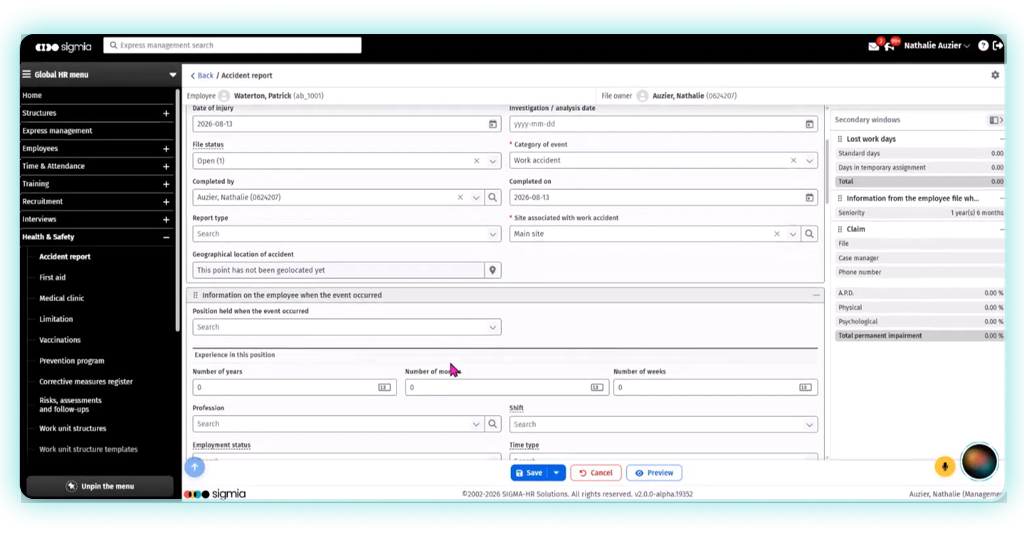
See how an appointment is planned and documented. Then follow expert evaluations, notes, communications and authorized actions within a structured case.
Integrated AI
AI retrieves the information. Professionals retain their judgment.
Private and contextualized, Sigmia AI helps authorized users retrieve and summarize accessible information. It does not provide diagnoses or replace professional judgment.
- Find an event or document
- Summarize accessible information
- Identify an expected action or follow-up activity


-
Workplace Injuries and Occupational Diseases -
Prevention and Risk Management -
Vaccination -
CNESST Assessments
It structures appointments, assessments, expert evaluations, follow-up notes, documents and authorized communications.
It can connect relevant information with absences, disabilities, occupational injuries and return-to-work stages.
Access is configured according to roles and responsibilities. Each person can view only the information they are authorized to access.
No. Assessments, diagnoses and clinical decisions remain the responsibility of qualified professionals.
Rights, access and traceability can be configured according to the organization’s policies and obligations.
It can find and summarize accessible information or identify an expected follow-up activity. It does not produce diagnoses.