

The Challenge of Talent Management
When talent decisions lack a complete workforce view
Recruiting, developing and retaining people becomes harder when talent processes and workforce data are disconnected. Sigmia connects talent management processes to give HR teams and managers clearer information for workforce decisions.
-
01
Attracting and retaining the right people
Connect recruitment, onboarding, performance and learning to create greater continuity across the employee journey and support long-term development.
-
02
Limited visibility into workforce skills
Bring talent and skills information together so HR teams and managers can better understand capabilities, gaps and development priorities.
-
03
Preparing future leaders
Identify high-potential employees, understand development needs and structure succession planning around critical roles and workforce capabilities.
-
04
Talent management that stays reactive
Connect recruitment, performance, learning and skills information to anticipate workforce needs and guide more informed talent decisions.


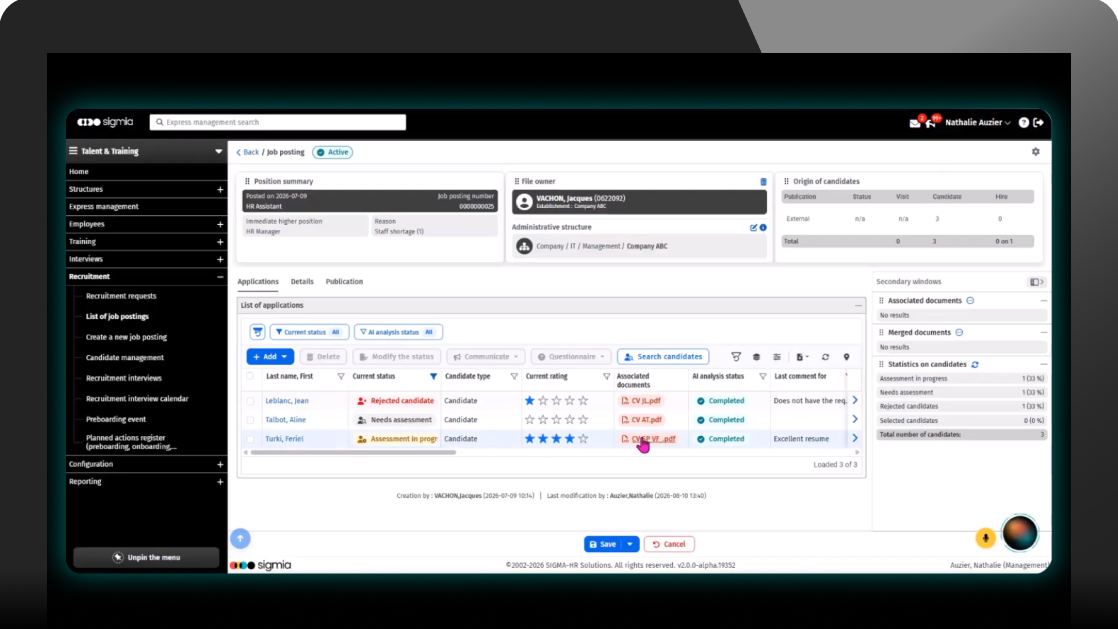
See the Talent Suite in action
See how Sigmia connects recruitment, performance, learning and skills to give HR teams and managers a clearer view of talent across the organization.
Embedded AI
AI support within your talent workflows
Sigmia works within supported talent processes to help teams structure information, prepare HR activities and reduce repetitive work while keeping people at the centre of every decision.
- Support candidate analysis and interview preparation
- Assist with performance reviews and HR information
- Help identify skills gaps and development priorities


-
Improve talent visibility
Bring skills and development information together for a clearer view of workforce capabilities.
-
Address critical skills gaps
Compare workforce capabilities with role requirements and focus development where it matters.
-
Strengthen employee development
Connect performance conversations, learning and skills to guide individual development priorities.
-
Identify high-potential employees
Make potential and development needs easier to identify and follow across the organization.
-
Strengthen succession planning
Identify and prepare potential successors for roles that are critical to your organization.
-
Support talent retention
Create greater continuity between performance, learning, development and internal talent decisions.
What your teams gain
Clearer talent data. Better-informed workforce decisions.
Connected talent management gives HR teams and managers greater visibility into workforce skills, development needs and succession priorities so they can prepare for changing organizational needs.
Sigmia’s Talent Suite connects recruitment, performance management, employee reviews, learning, skills development, high-potential identification and succession planning in one HR environment.
Sigmia helps compare employee capabilities with role requirements so HR teams can identify skills gaps and establish clearer learning and development priorities.
Yes. Organizations can identify high-potential employees, assess potential successors and structure development activities around key roles and future workforce needs.
Performance and review processes can be configured according to organizational rules and requirements, including review campaigns, questionnaires, evaluations and objectives.
Learning information can be connected with skills and development needs, helping organizations align training activities with identified workforce priorities.
Managers can access structured information on workforce skills, development needs, role requirements and talent priorities to support more informed decisions.