

The Challenges
When training is scattered, priorities are too
Needs come from employees, managers, evaluations, positions and organizational requirements. When they are tracked across multiple tools, it becomes difficult to build a consistent plan, manage budgets and demonstrate the skills developed.
Without the module
-
Requests arrive by email
-
Activities are difficult to find
-
Enrolments are tracked manually
-
Budgets and costs are scattered
-
Training remains disconnected from skills
With the module
-
Requests are centralized
-
Activities are grouped together
-
Enrolments follow a defined process
-
Budgets and costs are tracked
-
Training responds to documented needs
-
01
Training requests
Bring together individual and collective needs, then structure their analysis and approval.
-
02
Self-service catalogue
Present relevant activities and allow employees to submit requests.
-
03
Sessions and enrolments
Plan activities, groups, enrolments, waitlists and communications.
-
04
Learning paths and progress tracking
Group activities into learning paths and track progress. An integrated LMS is planned for early 2027.
-
05
Budgets and costs
Compare planned and committed amounts according to categories defined by the organization.
-
06
Skills and development
Connect training with position requirements, skill gaps and documented needs.
See a need become a tracked activity
See how a request can be analyzed, approved and integrated into the training plan. Then follow activity creation, enrolment, communications, costs and learning-path progress.
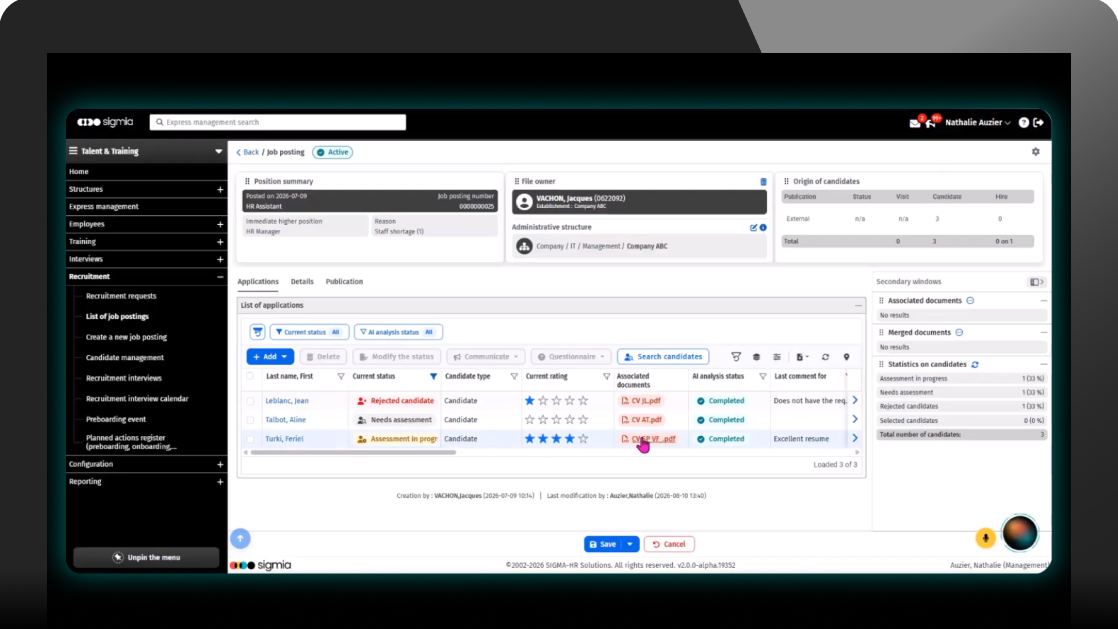
Integrated AI
AI connects the needs. Your teams choose the path.
Private and contextualized, Sigmia AI helps structure needs available through talent processes. Suggestions remain subject to review by your teams, who retain responsibility for plans, budgets and enrolments.
- Suggest training based on documented needs
- Connect skills with relevant activities
- Structure needs identified during evaluations


-
Recruitment -
Performance Evaluation -
03
Organization-Wide Skills Management
Compare available skills with position requirements and organizational priorities.
-
Core HR
It structures requests, activities, enrolments, learning paths, budgets and skills within a shared environment.
Yes. They can review available activities and submit a request according to the process defined by the organization.
Yes. Documented needs can support training requests and contribute to the preparation of the training plan.
Planned and committed amounts can be compared according to tracking categories defined by the organization.
The module centralizes the activities, budgets and expenses required for internal tracking. The employer remains responsible for determining eligibility and meeting applicable obligations.
The roadmap includes the integration of an LMS into the Sigmia platform in early 2027. It will support the hosting and delivery of content, online learning paths and digital activity tracking.
This development will focus on content delivery, the learning experience and educational follow-up. Content creation will remain supported by specialized market tools, including solutions that use artificial intelligence.