

Workplace Injuries and Occupational Diseases Module
From the incident to the return to work, keep every step connected
The Challenges
As cases multiply, follow-up becomes fragmented
An occupational injury involves OHS teams, HR, managers, payroll and multiple stakeholders. When facts, documents and decisions are scattered, every stage requires teams to reconstruct the case.
Without the module
-
Incidents are reported through multiple channels
-
Photos remain stored on individual phones
-
Documents are filed separately
-
Temporary assignments are tracked manually
-
Costs are analyzed after the fact
With the module
-
Incidents are reported from a mobile device
-
Photos remain connected to the case
-
Documents follow a shared history
-
Return-to-work activities are coordinated
-
Costs remain connected to each injury
-
01
Mobile incident reporting
Enable authorized users to report an incident from the field and attach photos.
-
02
WCB and CNESST claims
Bring together facts, forms, documents, decisions and communications for WCB and CNESST claims. Track appeals, deadlines and administrative and legal follow-up within the case.
-
03
Investigations and findings
Document causes, witnesses, inspections and the measures established following the incident.
-
04
Temporary assignments
Track proposals, authorizations, duties, dates and changes associated with the assignment.
-
05
Absence and return to work
Connect the injury with the employee record, absence, payroll and reintegration stages.
-
06
PPE, actions and indicators
Connect equipment, corrective measures and deadlines, then analyze trends.
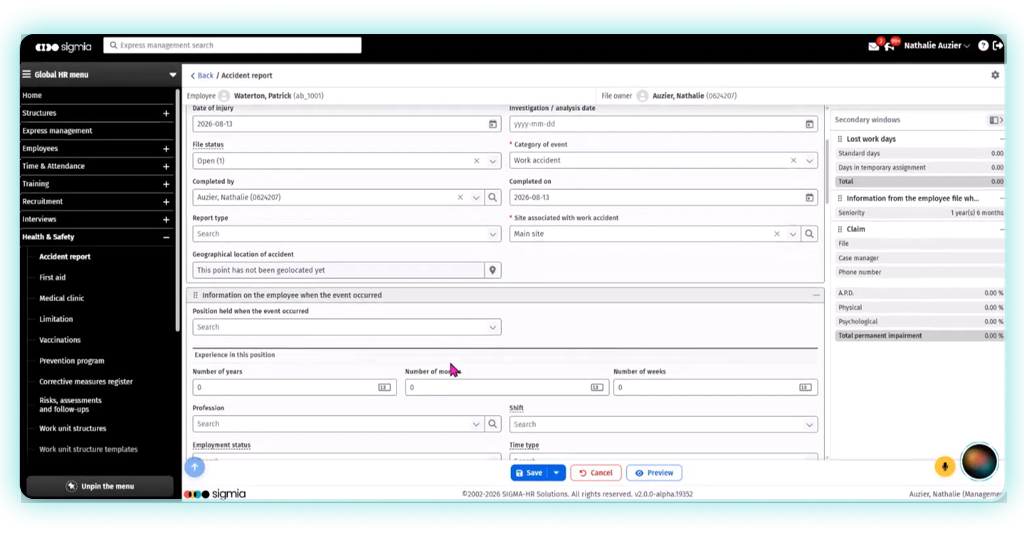
See an incident report become a fully tracked case
See how a workplace accident is reported from a mobile device with the relevant facts and photos. Then follow the claim, investigation, absence, temporary assignment and return-to-work process.
Integrated AI
AI prepares the case. Your teams make the decisions.
Private and contextualized, Sigmia AI helps authorized users find, extract and summarize accessible information. Reports, analyses and decisions remain their responsibility.
- Prepare a case summary
- Draft an initial incident report
- Prepopulate selected fields and documents


-
Prevention and Risk Management -
Occupational Health Clinics -
Vaccination -
CNESST Assessments
It centralizes workplace accidents, occupational diseases, claims, decisions, absences and return-to-work actions.
Yes. Authorized users can use the mobile application to report an incident and attach photos.
Proposals, documents, duties, dates and changes can be grouped within the occupational injury case.
It connects case stages with absences, documented abilities, proposed duties and stakeholder responsibilities.
Validated information can be connected with absences, benefits, hours worked and deployed payroll processes.
The module helps structure WCB and CNESST case files, forms, documents, deadlines and approvals. It does not automatically submit information on your behalf; authorized staff retain control over submissions and appeals.